


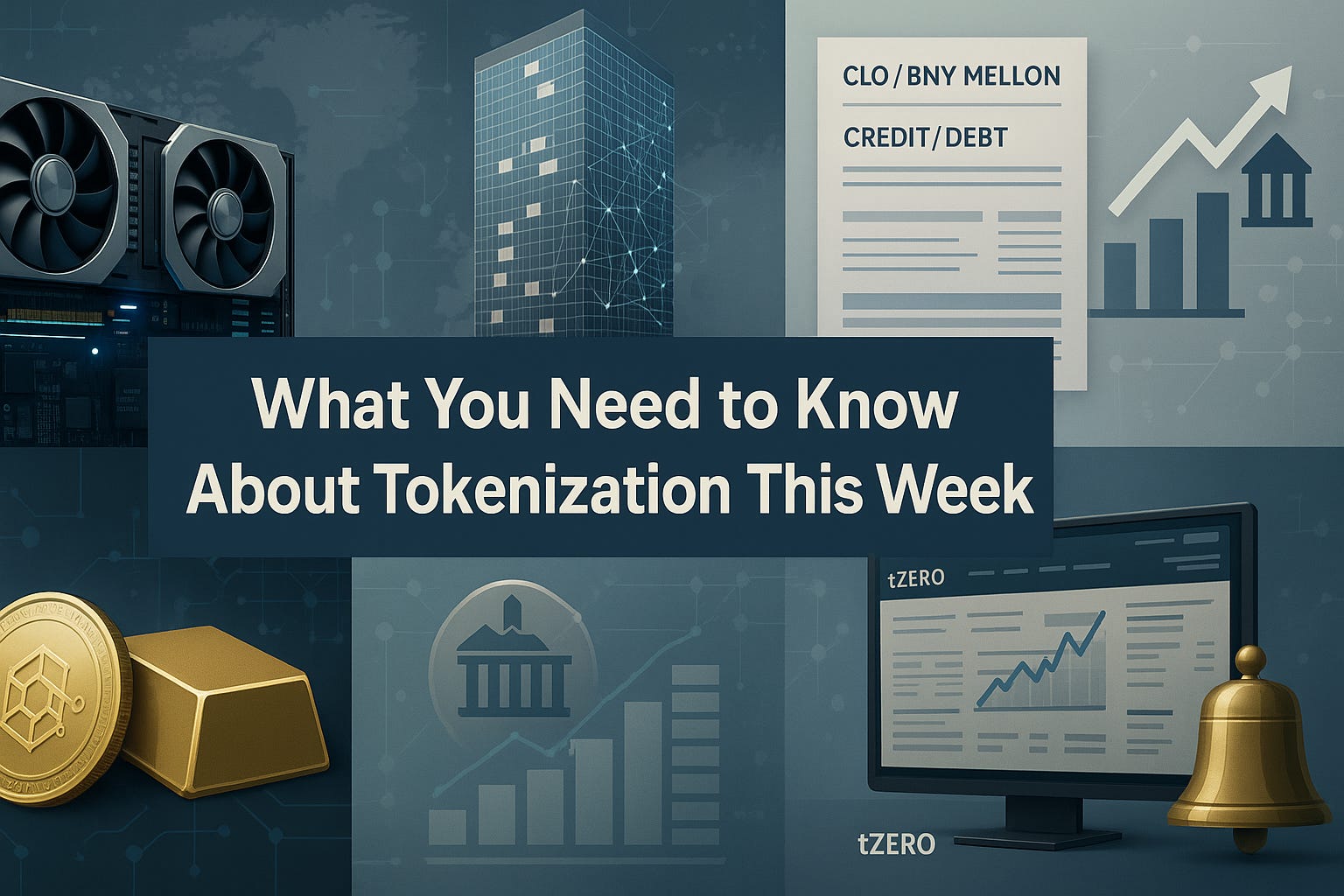
Exabits Labs Tokenizes AI Data Centers (New RWA Frontier in Tech)
What is it? Exabits Labs, a U.S.-based AI infrastructure fintech, has partnered with Singapore’s Freyr Technology to tokenize Freyr’s AI data center infrastructure (markets.businessinsider.com). This strategic real-world asset (RWA) partnership will convert Freyr’s high-performance computing and GPU data center assets into digital securities (RWA tokens), unlocking new financing avenues for the company. Freyr recently inked a $1.4 billion contract to build AI data centers in Southeast Asia, and tokenization could allow it to raise capital by offering investors fractional ownership in these cutting-edge facilities.
Why is it important? Real-world asset tokenization has mostly focused on traditional sectors like real estate until now – applying it to AI compute infrastructure is a novel frontier. This collaboration exemplifies the convergence of advanced AI tech with blockchain finance, potentially opening a massive new market for investing in digital infrastructure. By transforming physical GPU capacity into blockchain-based assets, Exabits and Freyr aim to set a precedent for funding tech infrastructure via crypto rails, bridging the gap between AI innovation and global investors.
What this means to you: For investment professionals, this case signals that tokenization is expanding into high-tech assets, not just real estate or art. It offers a new way to gain exposure to the growth of AI infrastructure projects via regulated digital tokens. Asset owners in emerging industries can take note: tokenization might provide a viable path to raise capital and involve global investors in sectors (like AI) that traditionally had high barriers to entry. In short, even AI data centers can become investable assets, indicating broader opportunities ahead in the tokenized economy.
First Tokenized Real Estate Deal on Canton Network (T-RIZE, Republic & Canton)
What is it? T-RIZE Group, in collaboration with investment platform Republic and the Canton blockchain network, launched the first tokenized new-construction real estate equity offering on Canton (markets.businessinsider.com). The project – a Canadian development – represents the first tranche of a planned $200 million issuance and is now open for subscription to U.S. accredited and other eligible investors via Republic’s regulated marketplace. This offering is issued natively on Canton (a permissioned, institutional blockchain), meaning the real estate equity is tokenized on an enterprise-grade network with built-in privacy and compliance features. It’s a fully regulated deal (under Reg D), providing investors an opportunity to buy into a property development through digital tokens.
Why is it important? This deal demonstrates how real estate can be brought on-chain through institutional-grade platforms. By combining T-RIZE’s structuring expertise, Canton’s privacy-enabled ledger, and Republic’s regulated distribution, the project shows a repeatable template for tokenizing real estate in a compliant way. Significantly, it addresses a broader market need: experts note that G20 countries face a huge housing shortfall, and tokenizing new construction could help scale up housing investment by attracting global capital. A Deloitte report even projects tokenized real estate could reach $4 trillion by 2035, underscoring the growth potential of such models (markets.businessinsider.com). In essence, this is a proof-of-concept that institutional real estate tokenization is moving from theory to reality on regulated rails.
What this means to you: If you’re an investor or asset owner, this development signals that tokenized real estate offerings are becoming accessible and credible. Deals like this offer a way to invest in property development with lower minimums and potentially improved liquidity, all while staying within regulatory guardrails. For asset owners (like developers), the success of T-RIZE’s approach suggests you could raise capital for projects by issuing tokens to a broader investor base without compromising on compliance or oversight. Overall, real estate tokenization is maturing – expect more opportunities to invest in property via tokens on secure platforms, which could democratize access to real estate and inject new liquidity into the sector.
Securitize & BNY Mellon Launch Tokenized Credit Fund (Fractional CLOs on Ethereum)
What is it? Securitize, a tokenization platform, has rolled out a tokenized fund offering exposure to AAA-rated collateralized loan obligations (CLOs) on the Ethereum blockchain (coindesk.com). The fund, called the Securitize Tokenized AAA CLO Fund (STAC), is bringing a traditionally niche, institutional credit product on-chain. Banking giant BNY Mellon is onboard as custodian and will provide fund services, while an on-chain credit allocator (Grove from the DeFi protocol Sky) plans to anchor the fund with a $100 million investment. In short, this product lets on-chain investors buy into a high-quality structured credit fund via digital tokens, with the reassurance of a major bank handling custody.
Why is it important? This marks a significant step in tokenizing debt and credit markets. CLO tranches, especially AAA-rated ones, have historically been difficult for most investors to access and slow to settle; tokenizing the fund’s shares could change that by enabling faster settlement, broader distribution, and easier fractional ownership. The involvement of BNY Mellon – a $57 trillion assets custodian – signals growing institutional confidence in blockchain-based funds. It also reflects surging appetite for real-world assets on-chain: analysts project the tokenized RWA market could grow from ~$35 billion now to nearly $19 trillion by 2033 as more products like this launch. In essence, investors searching for yield can now access high-quality credit through a tokenized vehicle, which could improve liquidity and transparency in the credit market.
What this means to you: For investment professionals, this development shows that tokenization is making inroads into mainstream fixed-income assets. You or your clients could soon invest in loan portfolios or bonds via tokens, gaining exposure to yields that were once reserved for large institutions, but with potentially lower friction and quicker liquidity. As BNY Mellon’s investment chief noted, tokenization is “a great way to improve access to high-quality credit” for those chasing yield. Asset owners managing credit products should also take note: tokenization can widen your investor base and streamline operations (settlements and record-keeping), provided you partner with credible institutions. Bottom line – tokenized funds are bringing Wall Street-grade credit products to a broader investor pool in a more efficient format.
Standard Chartered’s $2 Trillion Tokenization Forecast (Big Banks Embrace RWA Growth)
What is it? A new forecast from Standard Chartered Bank predicts the market for tokenized real-world assets will skyrocket from about $35 billion today to $2 trillion by 2028 (ihodl.com). That is a staggering 5,600% increase in less than five years. The report, led by the bank’s head of digital asset research Geoffrey Kendrick, attributes much of this anticipated growth to groundwork laid by stablecoins, which have built on-chain liquidity and awareness of digital assets. In the bank’s breakdown, they expect tokenized money market funds and tokenized stocks to lead the way (each around $750 billion of the projected total), with the remaining $500 billion coming from tokenizing other assets like real estate, private equity, and fund share.
Why is it important? This is a major validation from a traditional global bank that tokenization is not a passing fad but a transformative trend. When a bank like Standard Chartered projects a multi-trillion dollar tokenization market, it signals that mainstream finance is gearing up for a tokenized future. The forecast highlights which asset classes could drive this boom – notably, tokenized money markets and equities – suggesting that highly liquid, well-understood assets might be the first to see massive tokenized adoptionihodl.com. It also underscores the role of stablecoins as pioneers; by paving the way with on-chain dollars and liquidity, stablecoins have set the stage for other real-world assets to migrate to blockchainihodl.com. Essentially, institutional players are recognizing that tokenization can enhance liquidity, efficiency, and access across financial markets, and they are quantifying that opportunity on a huge scale.
What this means to you: For investors and asset owners, Standard Chartered’s projections are a wake-up call to prepare for rapid changes. A tokenized $2 trillion market by 2028 means you’ll likely see far more financial products offered in token form from treasury funds and stocks to real estate stakes, potentially with 24/7 markets and instant settlement. You might need to adapt your strategies and infrastructure to handle digital securities and on-chain transactions as part of everyday business. The upside is new opportunities: broader investor pools, improved liquidity for traditionally illiquid assets, and more efficient operations. In short, the financial industry’s heavyweights see tokenization becoming a core part of investment markets, so staying informed and engaged with this trend will be crucial for those who don’t want to be left behind.
Tether Gold Surpasses $2 Billion (Tokenized Gold Shines Amid Market Highs)
What is it? Tether Gold (XAU₮) – the world’s leading tokenized gold product – has seen its market capitalization soar past $2 billion as gold prices hit record highs (tether.io). By late October, XAU₮’s market cap was approaching $2.1 billion, reflecting a rush of investors into tokenized gold amid economic uncertainty. Each XAU₮ token represents one fine troy ounce of physical gold stored in Swiss vaults, and Tether attests a 1:1 backing for every token. In essence, this milestone means a very large quantity of real gold (over 11.6 tons by Q3 2025) is now held and traded in digital token form, making XAU₮ one of the most prominent examples of commodity tokenization.
Why is it important? Tether Gold’s growth illustrates the real-world traction of RWA tokenization in commodities. Gold is a traditional safe-haven asset, and investors are increasingly choosing to hold it via blockchain tokens, especially as gold itself has surged to all-time high prices this year. The fact that a tokenized asset can exceed $2 billion in value lends credibility to the broader tokenization trend – it’s proof that significant sums of capital are willing to move on-chain when there’s trust and transparency. Tether’s approach (full backing, regular attestations, regulatory compliance in El Salvador) shows that with proper safeguards, investors will embrace tokenized assets that offer the convenience of digital trading combined with the security of physical backing (tether.io). Moreover, it highlights how digital assets can complement macro trends: as inflation and geopolitical tensions drive investors toward gold, tokenization is providing a modern, liquid avenue to do so.
What this means to you: If you manage portfolios or assets, the rise of XAU₮ is a signal that tokenized commodities could become a mainstream part of investment strategy. It demonstrates that even conservative assets like gold can benefit from the efficiencies of blockchain – 24/7 trading, easy transfer, fractional ownership – without losing the underlying security of a tangible reserve. For asset owners, it’s an example of how adding transparency and digital accessibility can broaden your investor base (note that 70% of XAU₮ buyers in a recent sale were first-time Dubai real estate investors, indicating new market entrants – a trend seen in tokenization broadly (dubailand.gov.ae). For investors, tokenized gold offers a way to hedge and diversify with lower friction. Overall, Tether Gold’s milestone reinforces that real-world asset tokenization is not just theoretical – it’s attracting substantial investment and delivering real value in today’s markets.
tZERO Plans IPO as Tokenization Momentum Grows (Market Infrastructure Matures)
What is it? tZERO, a blockchain infrastructure firm known for its regulated tokenized securities platform, has announced plans to go public via an IPO (initial public offering). The New York-based company operates one of the leading platforms for trading digital asset securities (like tokenized stocks and real estate), and by pursuing a public listing it aims to significantly scale up its platform and reach. tZERO’s leadership stated that this move reflects their belief that blockchain-based tokenization will form “the new rails” for cross-border capital markets, and they want to be at the forefront of that evolution (coindesk.com). The IPO plan comes amid a flurry of crypto firms tapping public markets this year (Circle and others have listed), signaling rising investor appetite to back companies in the tokenization space.
Why is it important? tZERO’s decision to seek a stock-market listing is a strong indicator of how much tokenization has gained mainstream momentum. By going public, tZERO can access more capital to expand its regulated infrastructure for digital assets, which in turn could accelerate the availability of tokenized stocks, bonds, real estate and more to investors at large. The news underscores that tokenization is moving out of the experimental phase – a firm that has spent years building compliance-focused trading systems for security tokens now sees itself ready for prime time in public markets. It also highlights confidence in the sector: investors are willing to fund and trade equity in a tokenization platform, implying that Wall Street sees future revenue and growth in tokenized assets. Furthermore, tZERO’s IPO could set precedents for how other fintech and exchange platforms integrate blockchain; its belief that tokenization will be the backbone of future capital movement suggests that traditional market infrastructure may be reinvented around digital asset technology.
What this means to you: For investment professionals, a tokenization company going public means you’ll likely see more robust, regulated venues for trading tokenized assets soon. This could translate to greater liquidity and confidence in tokens representing equity or debt, since platforms like tZERO operate under regulatory oversight similar to traditional exchanges. If you’re an asset owner, the expansion of such platforms might offer new opportunities to issue or list tokenized shares of projects and funds to a wider audience. In practical terms, as infrastructure players like tZERO grow, you can expect the lines between traditional securities and digital tokens to continue blurring – with a future where raising capital or investing might involve blockchain tech by default. The takeaway: tokenization is becoming an integral part of capital markets, and the firms enabling it are stepping onto the public stage – a clear sign that this trend is here to stay and scale.